
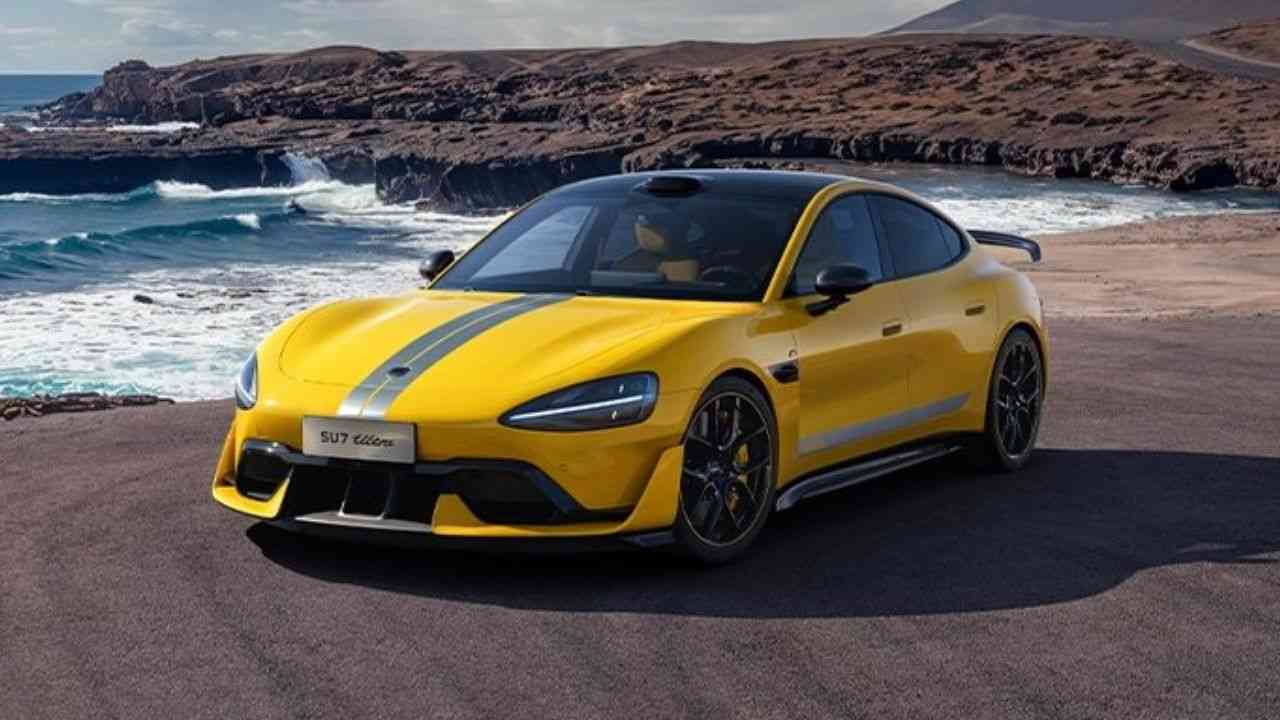
 Xiaomi accelerates electric car export plans after overcoming initial sales challenges in China (Weibo)
Xiaomi, initially hesitant to export its electric cars before 2030, has changed its strategy after experiencing both success and challenges in domestic sales.
The automaker, which initially faced difficulties such as high demand and vehicle shortages, has now partnered with the Chinese company Hyperion Leasing (Tianjin) to export its SU7 and YU7 models to international markets. Hyperion, a subsidiary of China National Machinery Industry (Sinomach), will be responsible for the export, warranty, and maintenance of the vehicles.
Despite significant losses in the first months of sales, Xiaomi saw its margins improve after reaching the milestone of 100,000 cars delivered, reducing per-unit losses. The company is now looking for profitability through exports, inspired by BYD’s success, which enjoys much higher profit margins from sales in Europe.
Demand for Xiaomi cars is remarkable, with over 139,000 SU7 units already delivered, and the company plans to expand production to meet growing interest.
Currently, most Xiaomi cars are exported to Russia through the parallel market, accounting for 50% of sales in 2024. The Middle East receives 30% of exports, while the remaining units are distributed globally, including in Latin America.
Xiaomi is thus finding new profit opportunities outside China, with exports playing a key role in its growth.
Source: Quatro Rodas | Photo: Weibo | This content was created with the help of AI and reviewed by the editorial team.
